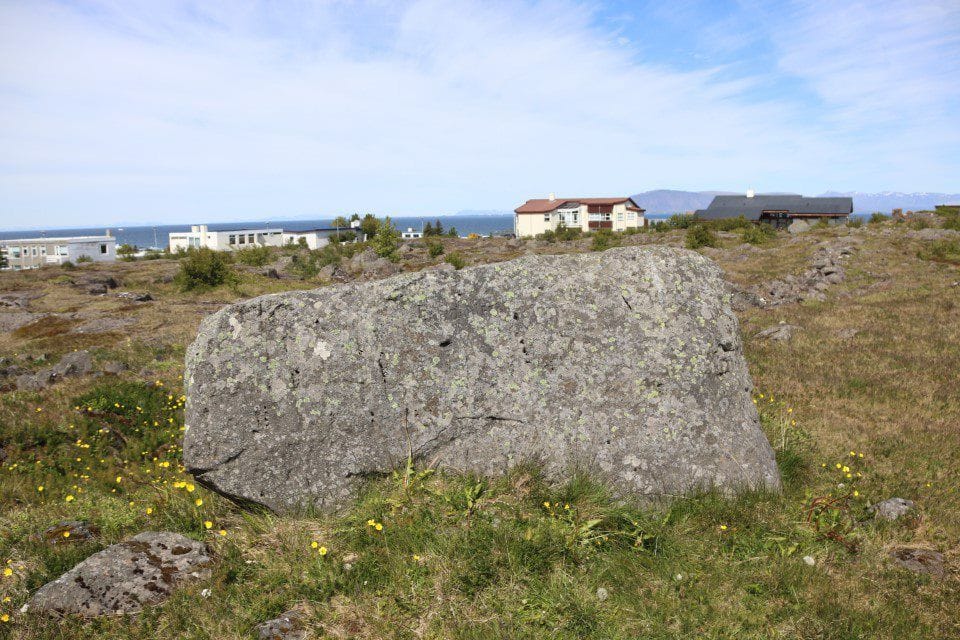
Valhúsahæð is a surprisingly varied landscape, where grassland, open gravel, patches of heath and small wetlands come together on the highest point of Seltjarnarnes. This mix of habitats supports a rich variety of plants, including:
- heath spotted orchid, fragrant orchid and fairy flax
- red fescue, blue fescue, smooth meadow grass and sweet vernal grass
- wild thyme, heath bedstraw, lady’s bedstraw and northern bedstraw
- field horsetail and marsh horsetail
- common plantain, forget me not, tufted vetch and grey willow
- matgrass, interrupted clubmoss, crowberry and heath rush
- silverweed, marsh violet, field pansy and lady’s mantle
- dandelion, broad leaved dock, common sorrel and meadow buttercup
The rocks beneath Valhúsahæð reveal an equally varied geological history. Unconsolidated sediments and layers of basalt are found across the hill, while grooves carved into the bedrock by ancient glaciers provide visible traces of the Ice Age. There may even be evidence of an ancient volcanic centre beneath Valhúsahæð. The precise age of the basalt lavas on Seltjarnarnes is uncertain, but they are thought to have formed during the penultimate interglacial period. The loose glacial deposits found in the area probably date from the end of the last glacial period.
The hill also tells a more recent story. Remains from the Second World War can still be seen at Valhúsahæð, preserving traces of the Allied occupation of Iceland.
Protection Status
Valhúsahæð was designated a natural monument in 1998. The area protects bedrock bearing glacial striations from the Ice Age and offers sweeping views across Faxaflói bay. The hill takes its name from buildings that once stood here and were used to keep hunting falcons belonging to the Danish king. Rising 31 metres above sea level, Valhúsahæð is the highest point on Seltjarnarnes.