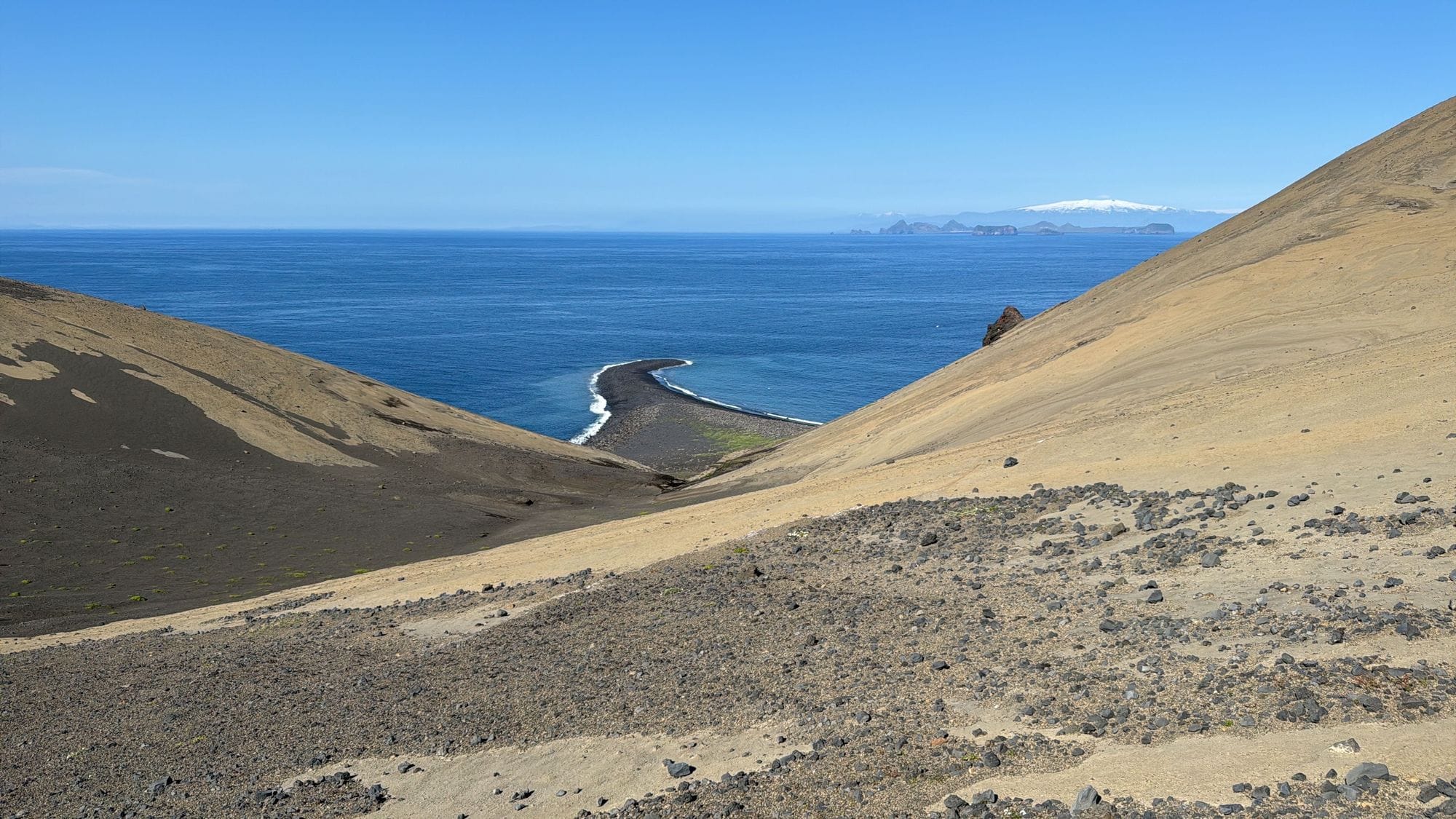
Protection Status
Shortly after Surtsey emerged, scientists recognised a unique opportunity to study the island’s development and the colonisation of life.
Surtsey was first protected in 1965, while volcanic activity was still ongoing, although the protection initially applied only to the above-sea portion of the volcanic island.
The protection designation was renewed in 1974 under updated nature conservation legislation.
In connection with Surtsey’s nomination to the UNESCO World Heritage List in 2006, the reserve was significantly expanded and today encompasses the entire volcanic system of Surtsey and the surrounding marine area, covering a total of approximately 65 km².
The 1965 protection designation prohibited tourist access to the island, a restriction that remains in place today unless permission is granted by the Iceland Nature Conservation Agency.
This was done primarily to prevent the human introduction of species, protect the island’s fragile environment, and allow Surtsey to develop according to natural processes without human interference.
UNESCO World Heritage Site
The UNESCO World Heritage Convention of 1972 concerns the protection of the world’s cultural and natural heritage.
Iceland signed the convention in 1995, thereby recognising the importance of preserving sites of outstanding universal value, based on the principle that damage to or loss of cultural or natural heritage constitutes a loss for all humanity.
The Ministry of Education is responsible for implementing the convention on behalf of Iceland.
In autumn 2005, the Icelandic government decided to nominate Surtsey for inscription on the UNESCO World Heritage List, and the nomination was prepared by the Icelandic Institute of Natural History.
Surtsey World Heritage Nomination Report 2007
On 7 July 2008, at a meeting of the UNESCO World Heritage Committee in Québec, Canada, Surtsey was officially inscribed on the World Heritage List as an exceptional natural site, based on the importance of the research and long-term monitoring of species colonisation, island development, and ecosystem succession.
Surtsey is the second site in Iceland to be inscribed on the UNESCO World Heritage List. In 2004, Þingvellir was listed as a site of outstanding cultural heritage.
The foresight shown in protecting Surtsey in 1965, combined with decades of scientific monitoring and research into the island’s geology and ecosystems, played a major role in securing its UNESCO World Heritage status.