Access and Information
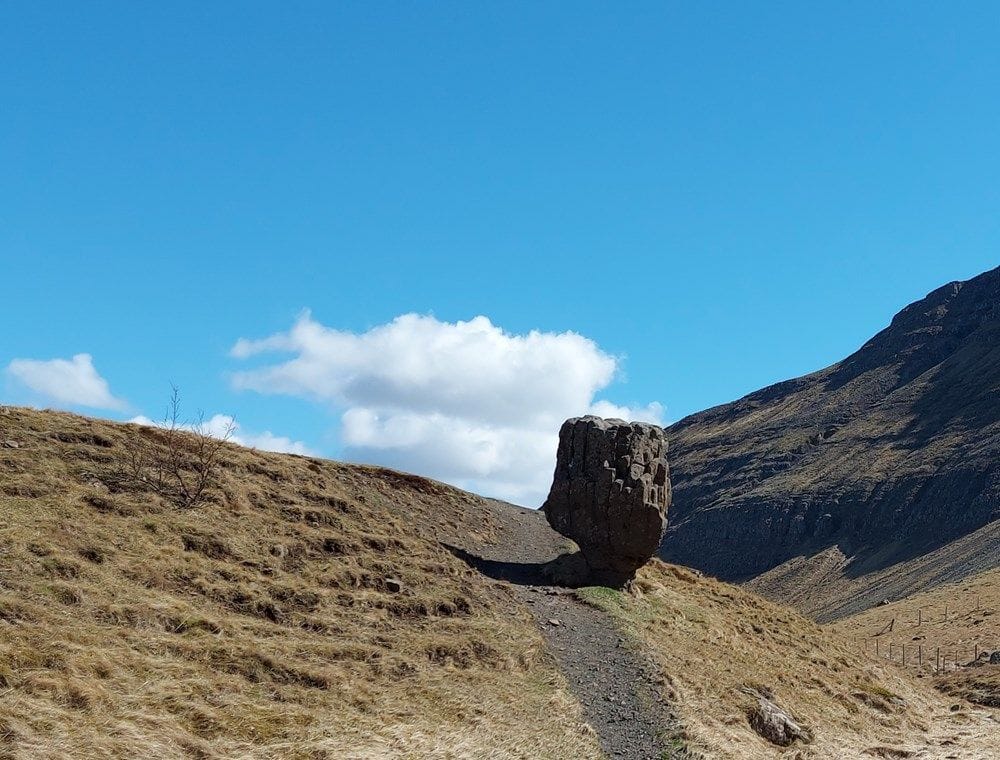
Steðji stands on a hill known as Skeiðhóll, beside Hvammsfjall in Hvalfjörður. A sign from the main road directs visitors to the site. The area includes a small parking area, an information sign about the natural monument, and a bench for visitors to sit and enjoy refreshments. Steðji can be visited year-round.
- Pedestrian access is permitted, but altering the natural monument in any way or damaging surrounding vegetation is prohibited. - Vehicles are permitted only on designated roads and within the marked parking area.
- Overnight stays are not permitted within the Steðji natural monument.
In terms of ecosystem services, Steðji is particularly valued for its educational and interpretive significance. The site offers striking landscape features and scenic diversity, supporting a range of recreational opportunities. It also holds cultural and artistic significance, reflected in local folklore about a solitary being said to reside within Steðji. In addition, the site has scientific and educational value, preserving geological history and serving as a useful destination for school visits and research.
Natural Heritage
Skeiðhóll, the hill upon which Steðji stands, formed in two distinct stages. The older, western part consists of a rock ledge of basalt lava layers, similar to those found in the lower slopes of Reynivallaháls. The eastern and younger section of Skeiðhóll formed approximately 10,000 years ago.
At that time, the climate was colder and snow remained year-round. Snowbanks accumulated against the rock ledge where Skeiðhóll and Steðji now stand. Material falling from the mountain rolled down onto the snow and accumulated on the ledge. As temperatures warmed at the beginning of the modern era, the snow melted and revealed an elongated ridge known as a protalus rampart.
Steðji itself is one of the large rocks that fell from the basalt cliffs above. The formation consists of two distinct layers: a lower section of reddish, porous scoria and an upper section of columnar basalt. Rocks falling from the cliffs today can still be seen accumulating in the scree slopes above Skeiðhóll.
Cultural Heritage
Steðji has been known by several names, including Prestur (“The Priest”), Karlinn í Skeiðhól, and Staupasteinn. Local folklore tells of a solitary figure living within the rock, known as Staupasteinn, after his unusual dwelling. Several stories describe him as a long-haired, bearded man who is kind-hearted, humorous, and especially fond of children.
According to legend, he most enjoys it when families stop near Steðji, while children play and parents enjoy the landscape and fresh air. Today, Staupasteinn is even regarded as a guardian spirit of the Hvalfjörður Tunnel.
Historically, the site was also a popular stopping place for travellers, leaving a lasting impression on journeys through the region.
Protection Status
Steðji was designated a natural monument in 1974, due to its distinctive and unusual shape.