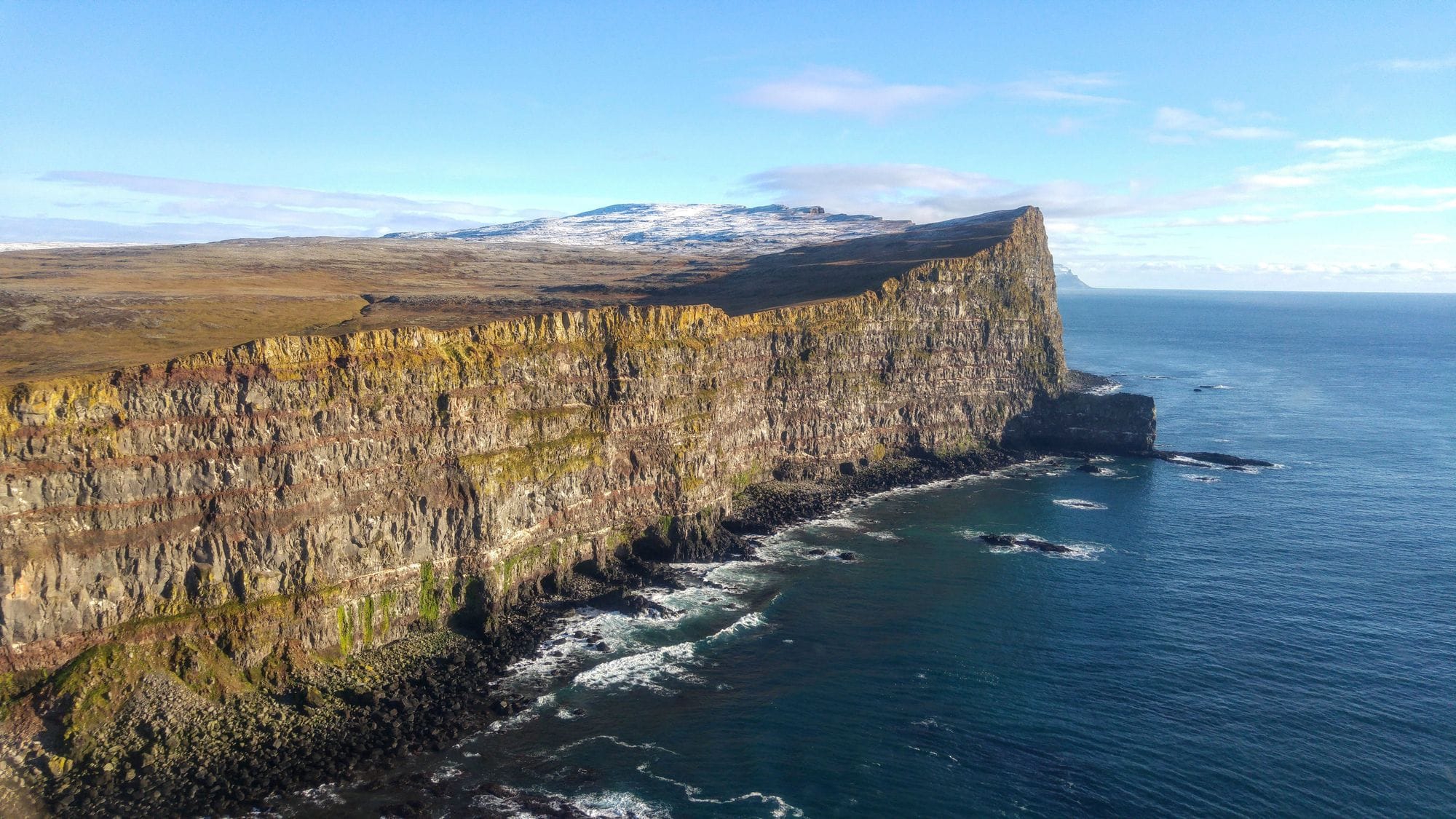
In the lava layers of Látrabjarg, the geological history of the Westfjords can be read, laid down by repeated volcanic eruptions millions of years ago. Between the lava layers lie soil strata that form deap ledges for nesting birds. This favourable habitat, combined with an abundant food supply in the surrounding waters, makes the area a highly valuable breeding site for seabirds.
Látrabjarg
Protection status
Látrabjarg was designated a nature reserve in March 2021. The aim of the protection is to protect the distinctive biota of Látrabjarg and the habitat of its birds, and to maintain the natural condition and landscape of the area. A further aim is to protect the cultural heritage and cultural resources of the area and to manage visitor access. The cliff as a whole is approximately 14 km long and 444 m at its highest point, though the section within the nature reserve is 9.7 km long. The reserve extends to the seabed, its ecosystem and water column 2 km offshore, covering a total area of 37 square kilometres.
The following special regulations apply to the area:
- All flights within 3,500 feet of sea level within the nature reserve are prohibited during the period 1 April – 31 August. Exempt from this ban are search and rescue operations and activities of the Icelandic Coast Guard and other institutions carrying out statutory research and monitoring of natural and cultural heritage.
- Cliff climbing and rappelling, other than that related to landowner's traditional resource use, are prohibited without a permit from the Nature Conservation Agency of Iceland.
- Landowners may not transfer their egg-harvesting rights to others without a permit from the Nature Conservation Agency of Iceland.
- Rangers or site manager may temporarily close walking routes for the protection of vegetation and geological features, or when a route is impassable, and may direct visitors via alternative routes where possible. Any such decision shall be made in consultation with the relevant local authority and landowners.