Access and Information
Húsafell Forest is easily accessible. A hiking trail begins at the service centre, where visitors can also find maps of the area and information about hiking routes. An old road passes through the protected area and is widely used for outdoor recreation and walking.
Visitor Guidelines
- Construction, land disturbance, and alterations to the landscape are subject to permission from the Iceland Nature Conservation Agency and landowners.
- The public is permitted to access and stay within the area for lawful purposes, provided good conduct is observed.
- Visitors must not damage vegetation, harm wildlife, pollute water, or unnecessarily disturb geological features.
- Driving is permitted only on roads and marked tracks.
- Livestock grazing is prohibited within the protected area, and driving sheep through the reserve is not permitted.
- Visitors are welcome to enjoy the area and are encouraged to treat nature and fellow visitors with respect.
Húsafell Forest lies within the Húsafell estate in the upper district of Borgarfjörður. For many years, Húsafell has been a popular holiday destination for Icelanders.
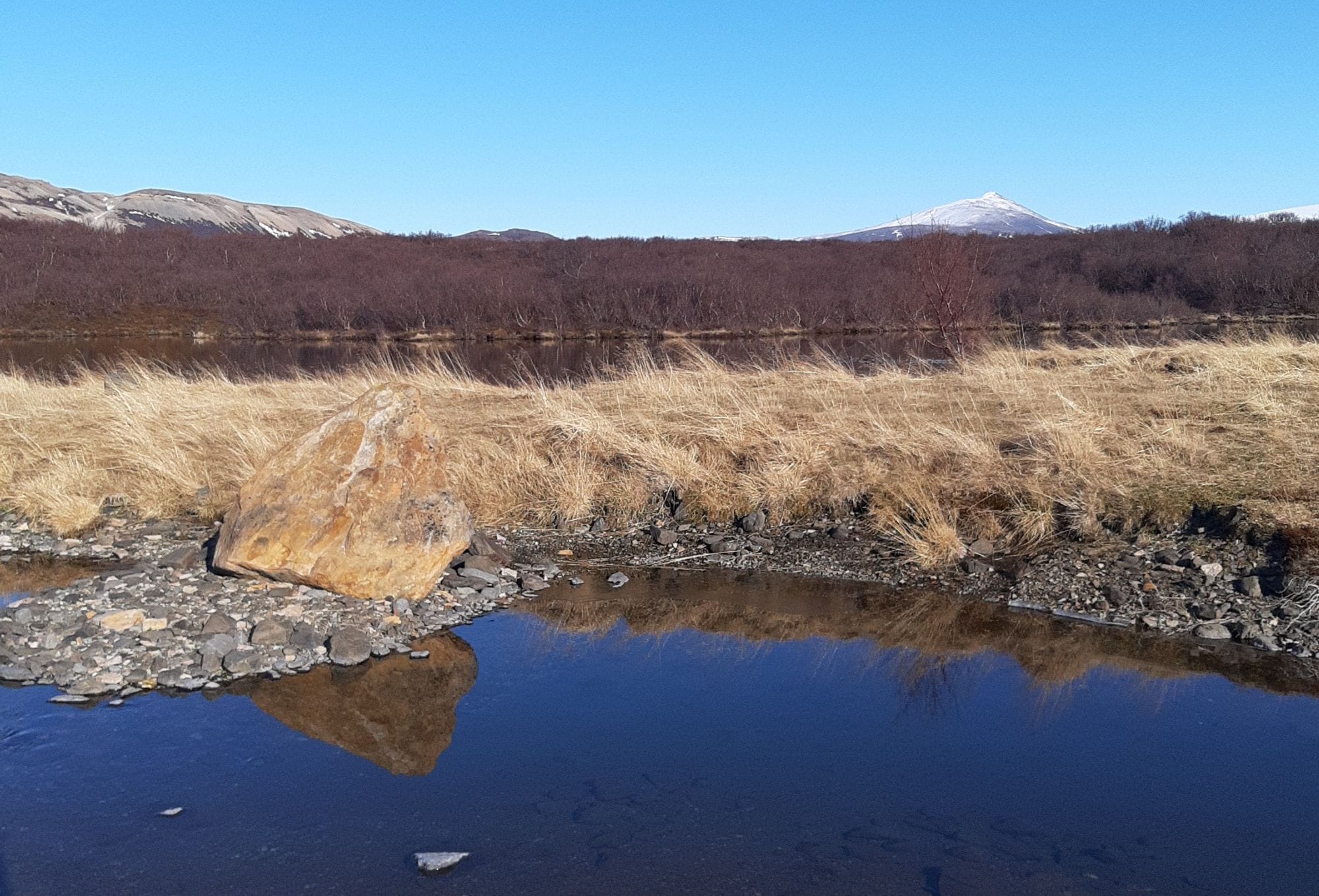
The area is an ancient central volcano, and traces of its volcanic history can be found throughout the landscape. Húsafell is known for its rich seasonal colours, visible throughout summer, winter, spring, and autumn.
Many notable artists have drawn inspiration from the landscape of Húsafell, and visitors can find artworks by local artist Páll Guðmundsson throughout the area. Along the hiking trails, various mythical stone figures created by Páll can also be seen.
For many years, sheep grazing was intensive in Húsafell Forest, resulting in limited birch regeneration and land degradation. Following grazing restrictions, the forest has recovered significantly. Today, the woodland is thriving, with strong birch regeneration and steady forest expansion.
Protection Status
Húsafell Forest was first designated a protected area in 1974, with the protection status revised in 2001.
The forest is a large birch woodland and popular outdoor recreation area. Its distance from the sea, combined with its proximity to springs and rivers, creates a unique habitat.
Birch is virtually the only native tree species in Iceland that forms forests. At the time of settlement, birch forests are believed to have covered up to 30% of Iceland, whereas today they cover only around 1.2% of the country.