Access and Information
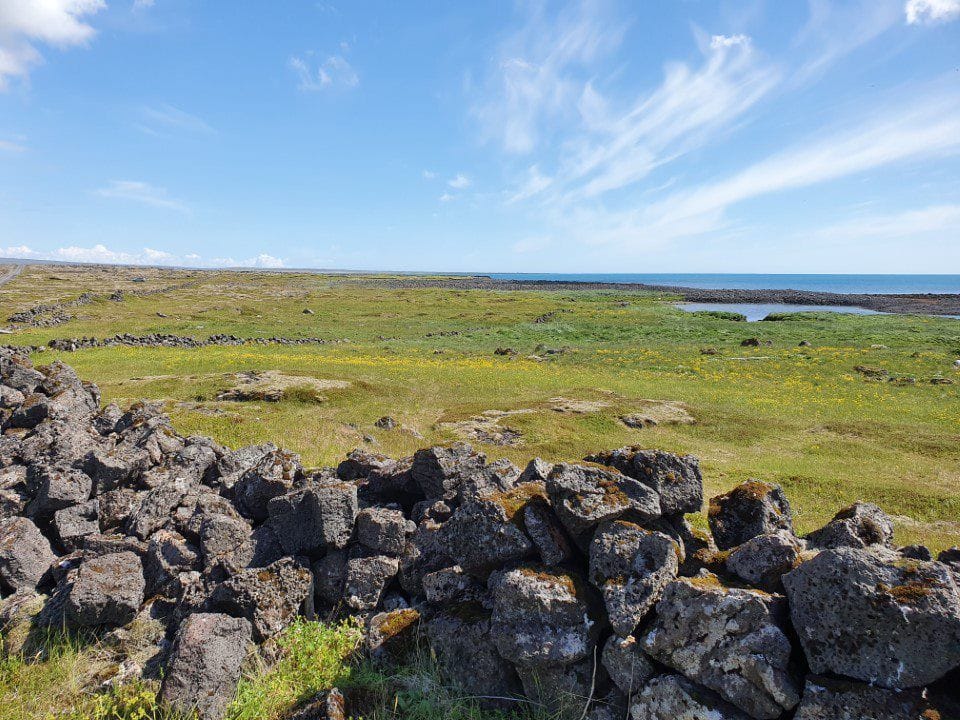
Herdísarvík is situated beside the broad and open bay of the same name, in the westernmost part of Selvogur, east of Krýsuvík.
A gravel access road leads from Suðurstrandarvegur (Road 427) to the area.
Several historic travel routes pass through the area, including an old route between Krýsuvík and Herdísarvík.
Interpretation
Herdísarvík was once a large farmstead in Selvogur but has since been abandoned. The poet Einar Benediktsson (1864–1940) spent his final years living at Herdísarvík and donated the property to the University of Iceland in 1935. According to folklore, Herdísarvík takes its name from Herdís, who is said to have lived there, while her sister Krýs or Krýsa lived in Krýsuvík. The sisters were believed to have been hostile toward one another and placed curses upon each other. Krýsa is said to have cursed the pond at Herdísarvík, declaring that it would erode its banks, destroy the sedge vegetation, damage the farmstead, and turn all trout into sticklebacks. In return, Herdís is said to have cursed Kleifarvatn so that all trout in the lake would become woolly trout (loðsilungur).
Protection Status
Herdísarvík was designated a nature reserve in 1988. The reserve covers approximately 4,218 hectares.