Access and Information
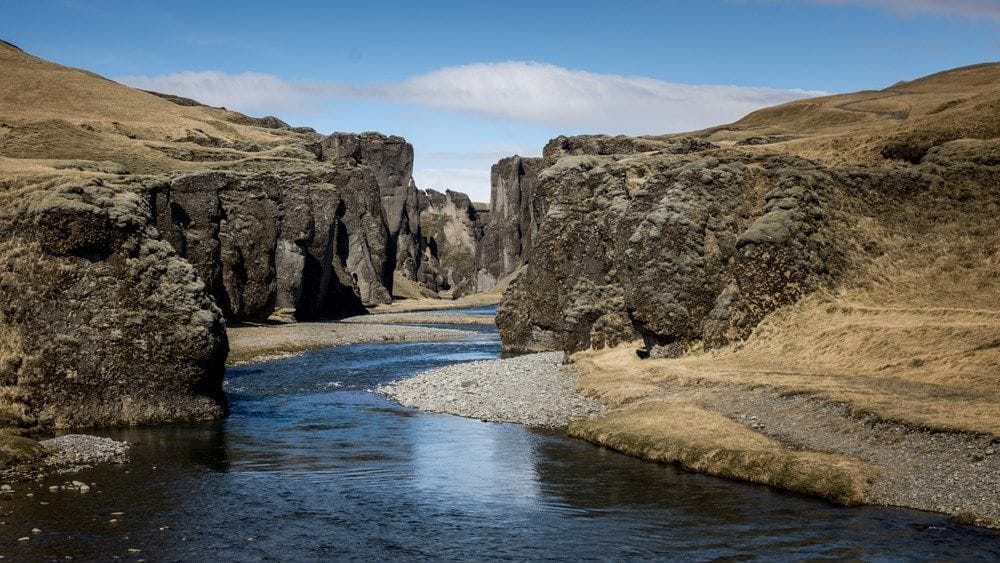
The main visitor access to Fjaðrárgljúfur is via the car park at the southern end of the canyon, located on Holtsvegur (Road 206). From there, a marked walking trail follows the eastern rim of the canyon, passing several viewing platforms before reaching a second car park further north. Visitors may also use the northern car park on Lakavegur (F206) while that road is open during the summer season. The main car park includes a visitor rest area and toilet facilities.
A service fee is charged at the site and is collected by the landowner.
The canyon floor itself is not intended for general public access, and no marked hiking trails lead through the canyon. Under the terms of the protected area designation, anglers are permitted to enter the canyon.
Protecting the Vegetation
Visitors are asked to stay on marked trails at all times and not leave designated walking paths. The vegetation within Fjaðrárgljúfur is highly fragile, and the area experiences very high visitor numbers, making it particularly vulnerable to trampling. During periods of snowmelt or heavy rainfall, the ground becomes especially susceptible to damage, and walking off designated trails can cause significant and long-lasting harm to the vegetation.
Interpretation
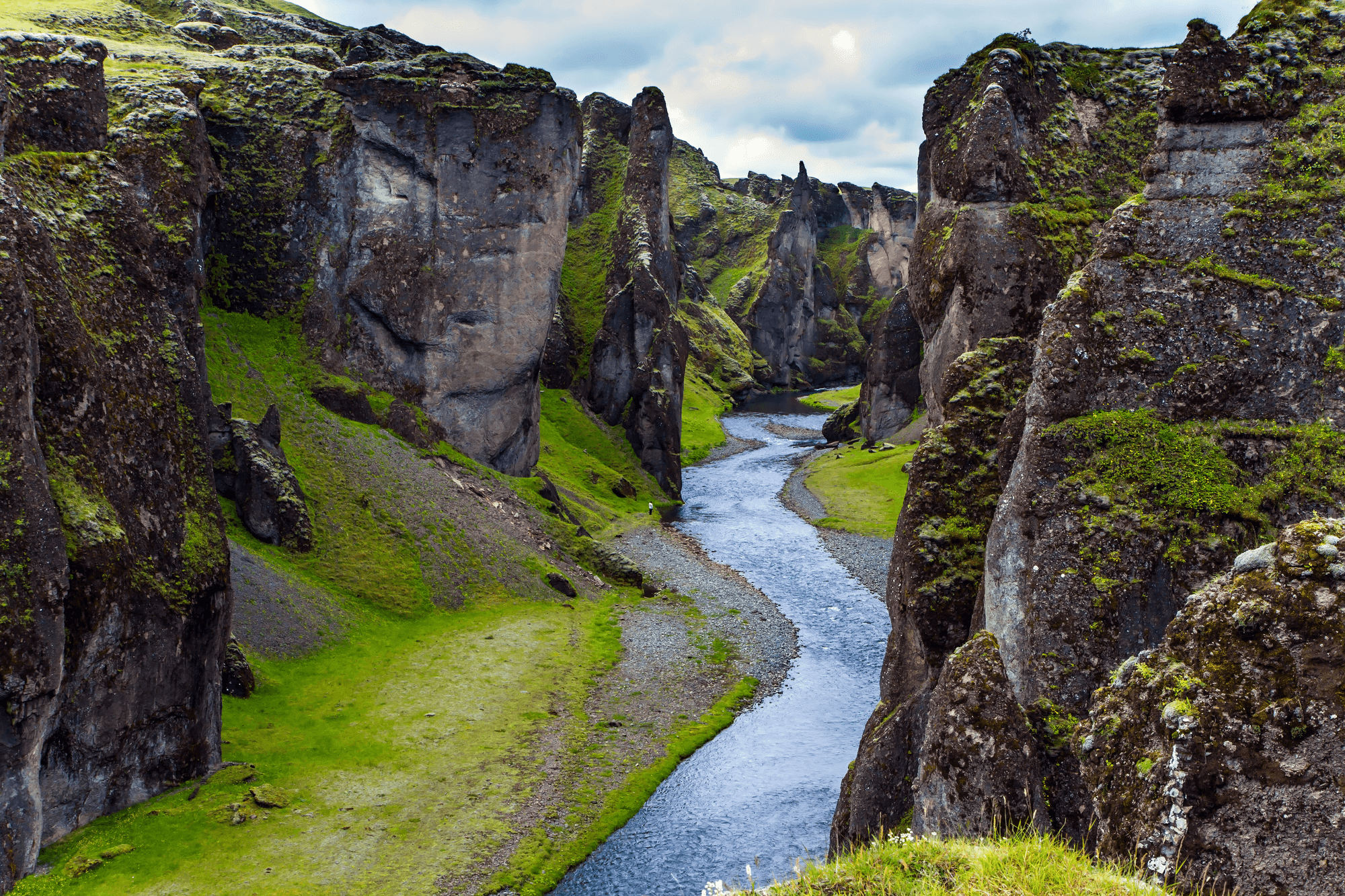
Fjaðrárgljúfur is about 1.5 km long and reaches a depth of approximately 100 metres. The canyon is an excellent example of an active geological process that began at the end of the last Ice Age, around 10,000 years ago, and continues to shape the landscape today.
Above Fjaðrárgljúfur are gravel terraces that indicate the former presence of a glacial lake. The lake formed in front of a retreating glacier, where an obstruction blocked the upper end of what is now the canyon. It filled relatively quickly with sediment, after which powerful, sediment laden glacial rivers were able to carve their way down into the underlying hyaloclastite bedrock.
Waterfalls can be found at the innermost part of Fjaðrárgljúfur. Although the Fjaðrá river is far less powerful today than the large glacial rivers that flowed here at the end of the Ice Age, the canyon is still being shaped by the forces of water and erosion.
Protection Status
Part of Fjaðrárgljúfur in Skaftárhreppur was designated a natural monument in 2024. The protected area covers approximately 0.15 km². The purpose of the designation is to protect the canyon's vegetation, distinctive landscape, geological formations, river channel, and waterfalls. The protection also seeks to safeguard the area's geological heritage and visual character, ensuring that its unique national significance is preserved. The protected area is managed to provide opportunities for public enjoyment and appreciation of nature, while ensuring that access does not compromise its natural values or the experience of other visitors.
According to the International Union for Conservation of Nature (IUCN) protected area classification system, Fjaðrárgljúfur is classified as a Category III protected area (Natural Monument).