Access and Information
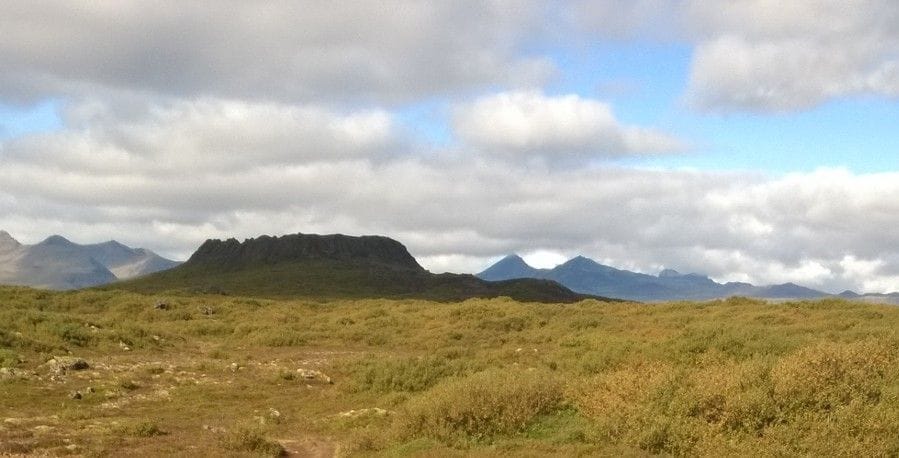
Eldborg is located in the centre of the Eldborgarhraun lava field in Hnappadalur, approximately 38 km north of Borgarnes. The hike begins at Snorrastaðir, where a 3.4 km walking trail leads through shrub-covered lava fields to the crater. Visitor services are available at Snorrastaðir, including parking facilities and toilets. The area is open year-round, although access may become difficult during periods of heavy snow, and visitors are advised to exercise caution. The site is managed by the Iceland Nature Conservation Agency, with year-round ranger presence. The trail to Eldborg is varied and scenic, leading through vegetated lava landscapes. Along the route, visitors can observe beautiful lava formations, and with careful observation, many rock formations resemble imaginary or mythical figures. From the summit of Eldborg, there are panoramic views in every direction. In clear weather, the mountain horizon stretches from Snæfellsjökull to Reykjanes.
Visitor Guidelines
- Land alteration, construction, and any form of land disturbance are prohibited.
- Pedestrian access is permitted, but visitors are expected to exercise caution to avoid damaging vegetation or cultural remains. Visitors are encouraged to follow marked hiking trails, particularly on the crater slopes and other designated areas.
- All motor vehicle traffic is prohibited within the protected area.
- Horse travel is subject to permit, and grazing is strictly prohibited.
- Livestock grazing may be restricted if necessary to protect vegetation, and any fencing arrangements must be coordinated with local landowners.
Visitors are welcome to enjoy the area and are encouraged to respect nature and fellow visitors.
Protection Status
Eldborg was designated a natural monument in 1974. Eldborg is an oval-shaped volcanic crater rising approximately 100 metres above sea level and about 60 metres above the surrounding lava field. It is the largest crater along a short eruptive fissure, measuring approximately 200 metres in length and 50 metres in depth. It is believed that two eruptions occurred at the site, with the later eruption most likely taking place during the Settlement Age. Eldborg forms part of the Ljósufjöll volcanic system.