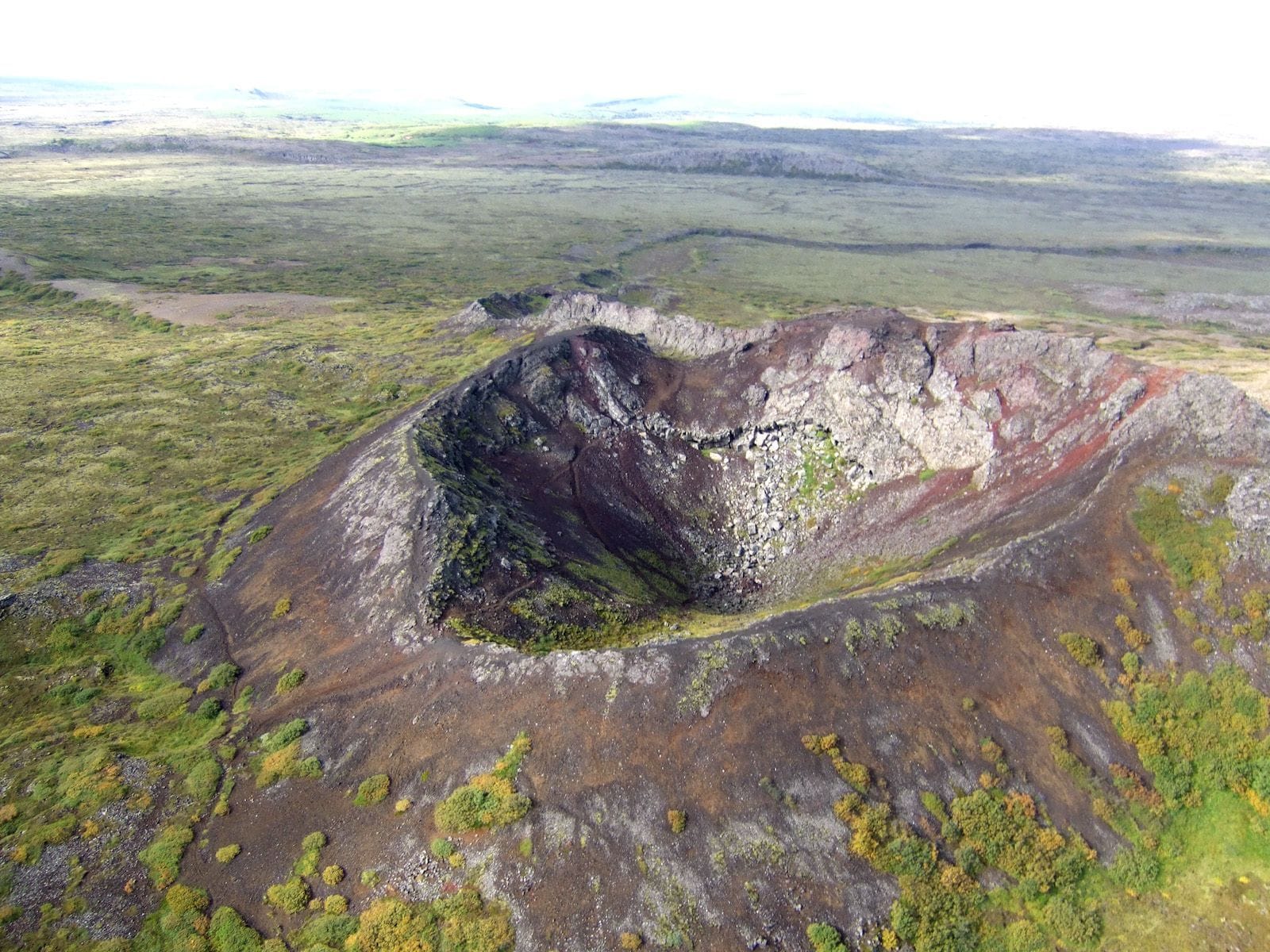
Búrfell, the lava channels extending from the crater, as well as the fissures and faults, are prominent features of the landscape. Búrfell is an isolated scoria and spatter cone belonging to the Krýsuvík volcanic system. Around 8,100 years ago, early in the Holocene, Búrfellshraun lava flowed from Búrfell. The appearance of the lava varies across the area. Close to its source at Búrfell, it consists of smooth pāhoehoe lava with lava channels and lava tubes containing caves. Farther from the source, the lava has a rougher, more blocky surface. The area also contains numerous cultural heritage sites, including sheep shelters and the remains of seasonal farmsteads. Some of these are considered particularly distinctive, having been built along the edges of fissures and including living quarters, kitchens, sheep pens and enclosures.
Protection Status
Búrfell, Búrfellsgjá and Selgjá in Garðabær were designated as a natural monument on 25 June 2020. Part of the area has also been protected as part of Reykjanesfólkvangur since 1975.