Access and visitor information
Visitors are welcome to explore the area, provided they treat the natural environment with care. During the bird breeding season, from 1 May to 1 July, access to the part of the nature reserve closest to Bakkatjörn is restricted. Dogs are not permitted within the nature reserve.
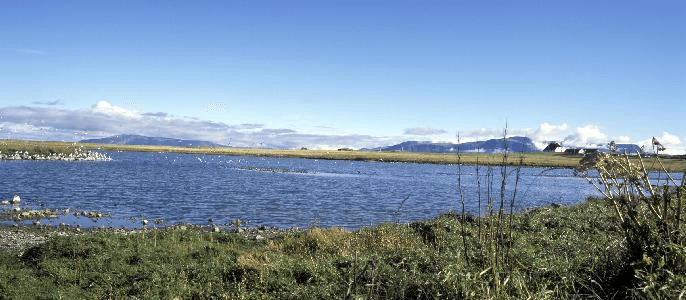
The area surrounding Bakkatjörn consists of grassland on sandy soils and wetlands. Plant species found within the nature reserve include lyme grass, creeping bent, silverweed, shepherd’s purse, bog onion, broad leaved dock, red fescue, smooth meadow grass, field horsetail, common sedge, marsh foxtail, mare’s tail, reed canary grass, yellow sedge, marsh cinquefoil, jointed rush, scentless mayweed, sea sandwort, sea rocket, chickweed, yarrow, tufted hair grass, goldenrod, meadowsweet, curled dock, tufted vetch, marsh marigold, eyebright, common sorrel, autumn hawkbit, meadow buttercup, lady’s mantle, forget me not, white clover and sweet vernal grass.
In the wettest areas, species include mare’s tail, yellow sedge, common sedge, common cottongrass, hare’s tail cottongrass, marsh marigold, creeping bent, jointed rush, bog onion and marsh foxtail.
Wildlife
The number of recorded bird species on Seltjarnarnes increased by around 28% between 1957 and 1992. A survey carried out in 1986 found that Arctic terns were by far the most abundant breeding birds in the area, with around 900 pairs, approximately 200 of which nested north and east of Bakkatjörn.
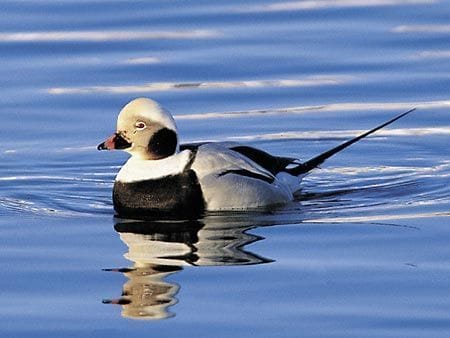
After Bakkatjörn formed in the early 1960s, several duck species began visiting the area and later started breeding there as feeding conditions changed. Long tailed ducks also benefited from the changing landscape, having previously been common winter visitors in the waters around the peninsula.
Red necked phalaropes can be seen from mid May until the latter part of August. In July and August, hundreds may gather at Bakkatjörn and in the surrounding area. Bakkatjörn provides important feeding habitat for birds, as well as roosting and resting areas around its shores.
The transformation of the former inlet into a pond is thought to have significantly altered the invertebrate community, as the former intertidal mudflats were replaced by a freshwater pond.
Protection status
Bakkatjörn was designated as a nature reserve in 2000. It is a brackish pond that formed around 1960 when the tidal inlet that previously occupied the area was closed off. A depression known as Rásin once connected Bakkatjörn with Seftjörn, which has since disappeared beneath urban development.
The nature reserve covers 14.9 hectares.