What is a glacier?
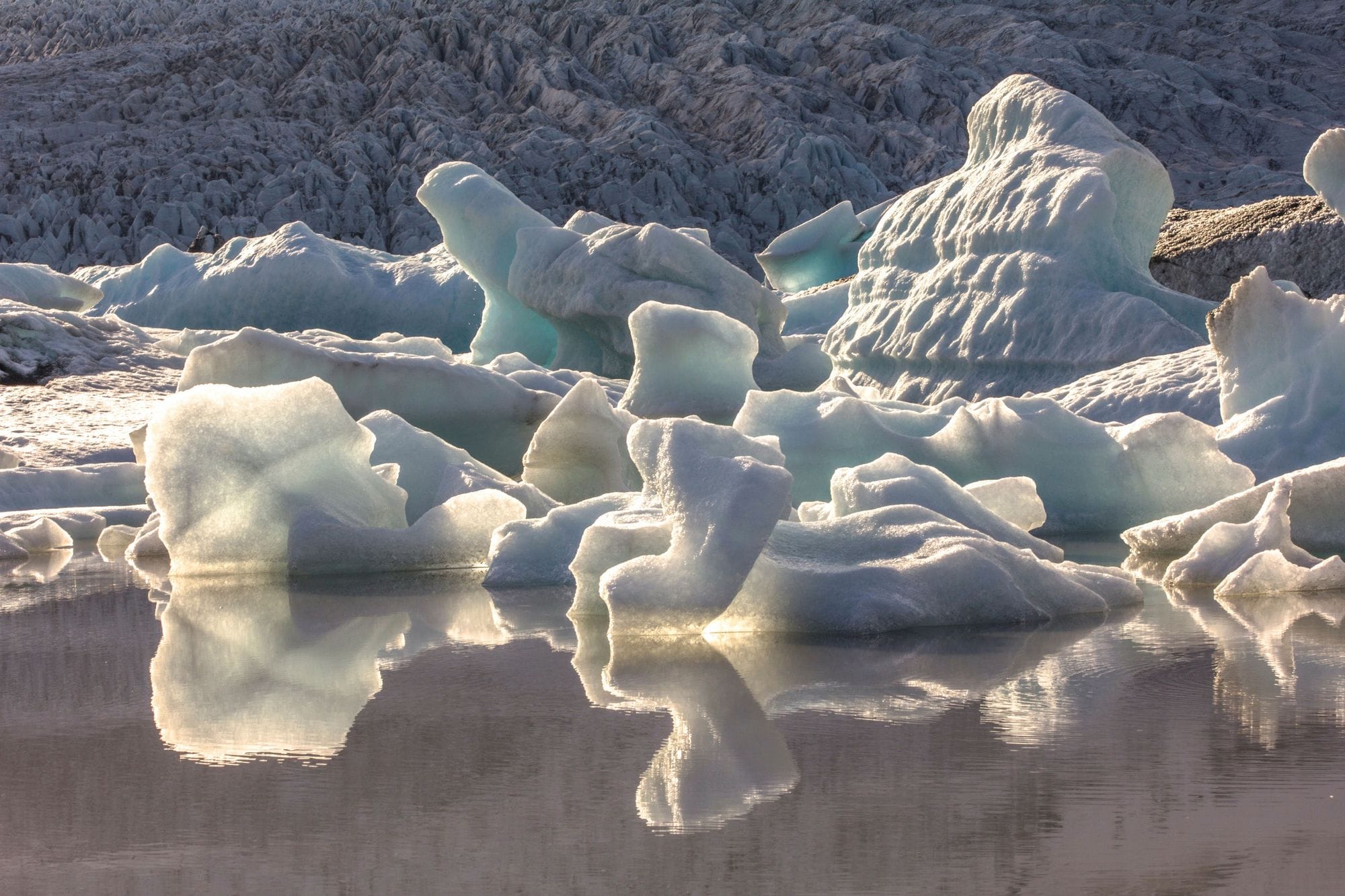
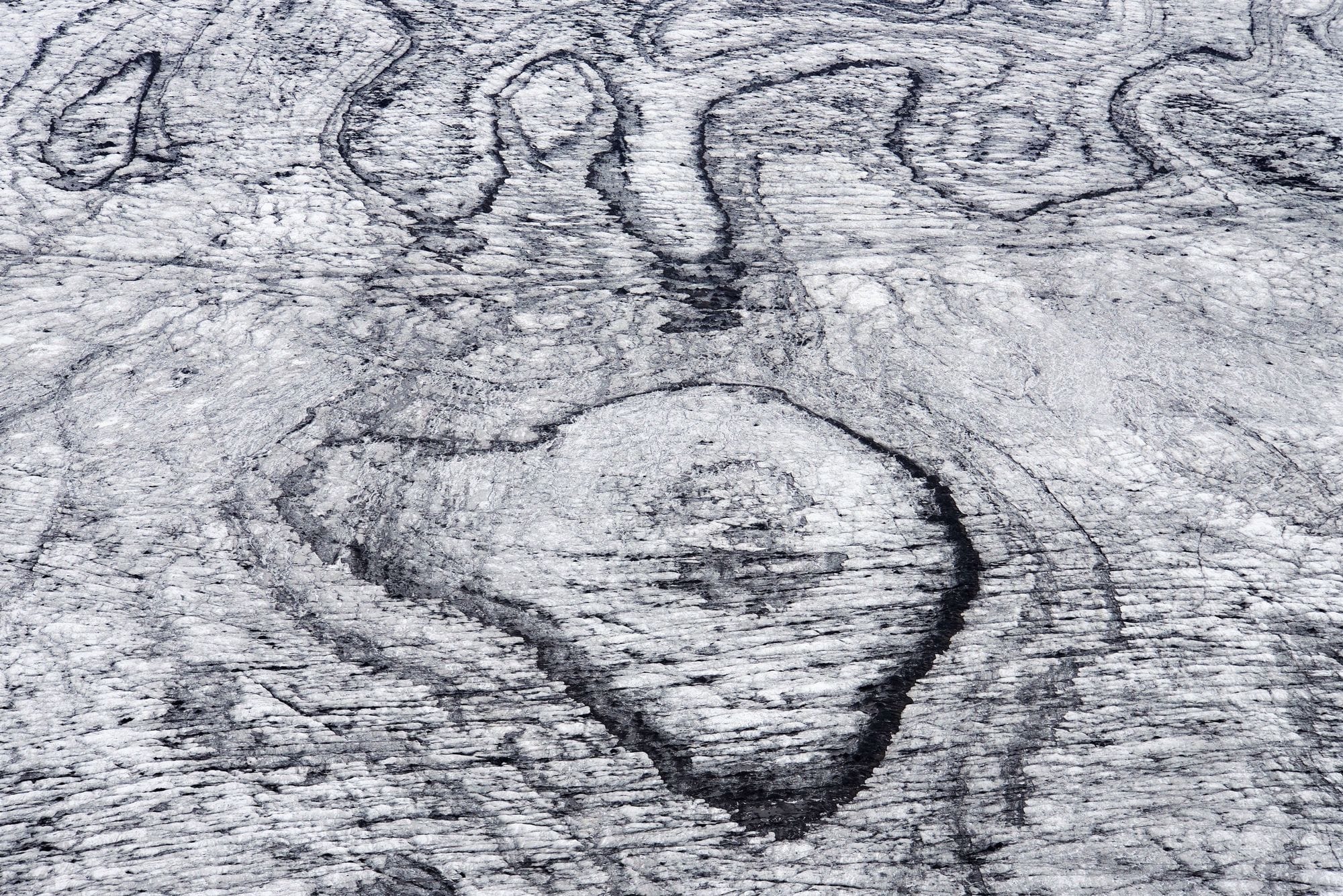
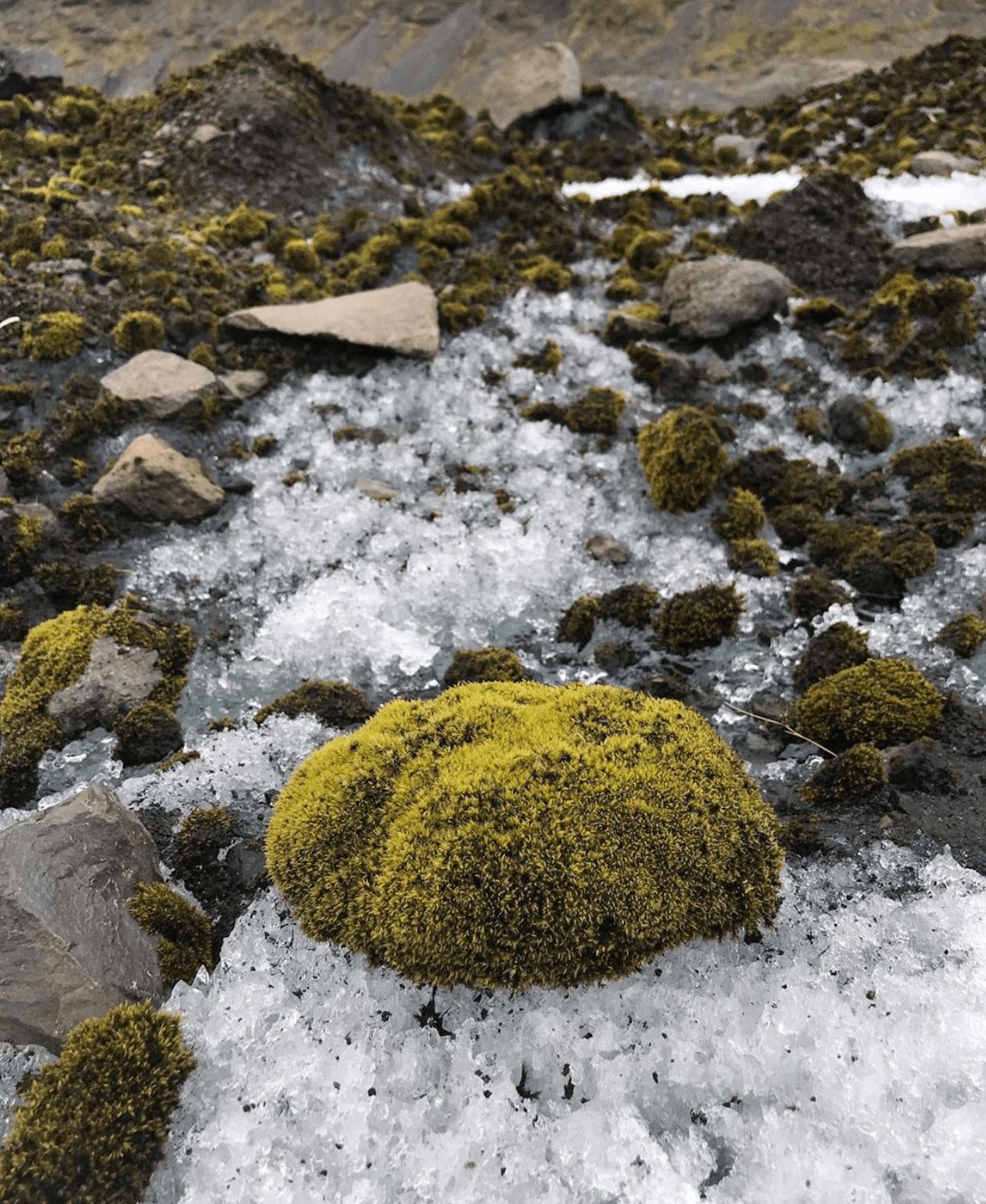
A glacier is made up of ice crystals, snow, air, water and sediment. Glacial ice forms mainly from compacted snow, with only a small proportion formed by the freezing of water.
Glaciers form in areas where more snow falls during the year than typically melts in summer. As layers of snow accumulate, the increasing weight compresses the snow, gradually transforming it first into firn (compacted snow) and eventually into ice.
This process takes place in the glacier's accumulation zone. As the glacier grows, its own weight causes the ice to deform and flow slowly downhill, much like a thick, viscous liquid or dough.
In this way, the glacier moves down mountain slopes and valleys towards its ablation zone, where rising air temperatures at lower elevations cause the ice to melt.
Melting glaciers
Hörfandi jöklar (Melting glaciers) is an educational website developed as part of a joint project between Vatnajökull National Park and the Icelandic Meteorological Office.
The project was funded by the Ministry for the Environment and Natural Resources and carried out in collaboration with the South East Iceland Nature Research Centre and the Glaciology Group at the University of Iceland's Institute of Earth Sciences.