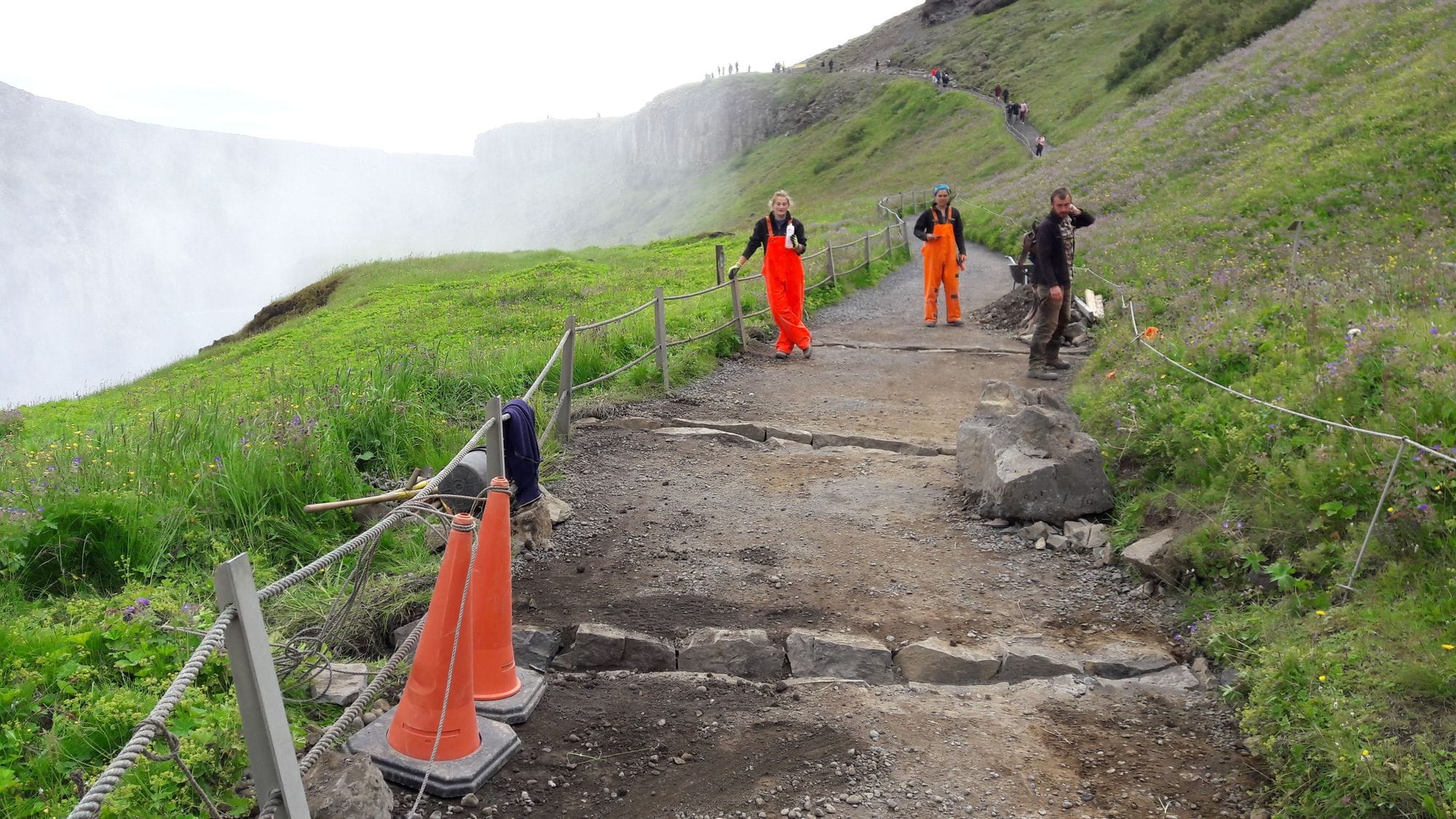
The Environment Agency of Iceland, the predecessor of the Nature Conservation Agency of Iceland, supported nature conservation volunteering from its establishment. Today, the Nature Conservation Agency's volunteer programme involves a wide range of projects in protected areas across Iceland, with participants contributing directly to the protection and restoration of nature.
The first volunteers worked in Skaftafell and Jökulsárgljúfur in 1978, carrying out conservation and infrastructure projects that laid the foundations for the programme. Their work took them to several locations around the country and included building a stone wall around a newly constructed ranger station in Jökulsárgljúfur National Park, which is now part of Vatnajökull National Park.
For several decades, the programme was run in cooperation with the British Conservation Volunteers (BTCV). It is now managed by the Nature Conservation Agency of Iceland, which also works with Icelandic upper secondary schools.
Between 1996 and 2017, volunteers contributed 6,991 working days across more than 60 protected areas throughout Iceland. In the early years, most participants came from abroad. Cooperation with Icelandic upper secondary schools began in 2013, increasing the proportion of Icelandic volunteers from 1% to 21%.
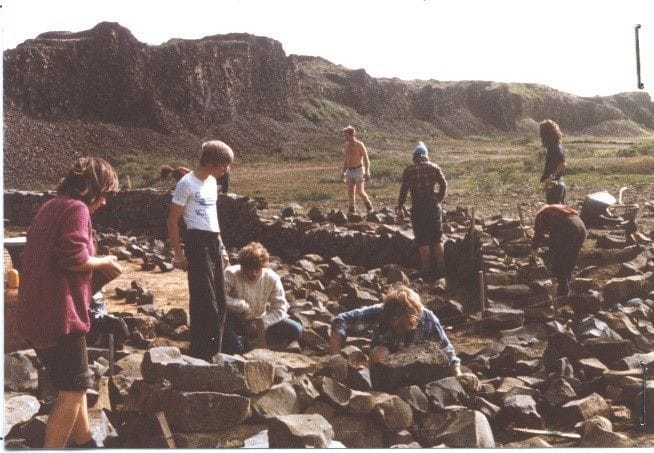
Volunteers in the summer of 1978.
Volunteers with the Nature Conservation Agency of Iceland work in protected areas and areas listed in the Nature Conservation Register, supporting rangers and contributing to nature conservation. Their role is not to replace paid staff, but to help restore, maintain and protect Iceland’s natural environment, including landscapes, vegetation, wildlife and biodiversity.
Projects are carried out using simple tools, often in remote areas. Volunteers gain valuable experience that can benefit them in their studies and future careers. The programme also has an important social dimension, bringing together people from Iceland and other countries who share an interest in nature conservation.
In 2017, the Environment Agency of Iceland, the predecessor of the Nature Conservation Agency of Iceland, took part in Green Weekend for the first time. This international event brought Icelandic and international volunteers together to maintain hiking trails in Reykjanesfólkvangur. Initiatives such as this have helped strengthen the tradition of nature conservation volunteering in Iceland.
Many Nature Conservation Agency staff are involved in the volunteer programme, including coordinators, rangers and team leaders who organise projects, provide training and ensure the safety of volunteer groups. Many team leaders return year after year, building extensive experience and passing their knowledge on to new volunteers.
The volunteer programme also has a long history of international cooperation. The Environment Agency of Iceland was actively involved in cooperation through the EUROPARC Federation, and the Nature Conservation Agency continues to build on the experience and knowledge developed through the programme. Over the years, programme managers and volunteers have shared knowledge and experience across borders, and the Icelandic programme has helped inspire volunteer initiatives in other countries, including Lebanon.
Over the past four decades, more than 3,000 people have taken part in nature conservation volunteering through the Nature Conservation Council, the Environment Agency of Iceland and, today, the Nature Conservation Agency of Iceland. Many have gone on to work in nature conservation in Iceland and abroad. The programme has therefore contributed not only to the protection of Icelandic nature, but also to building knowledge, experience and connections between people around the world.