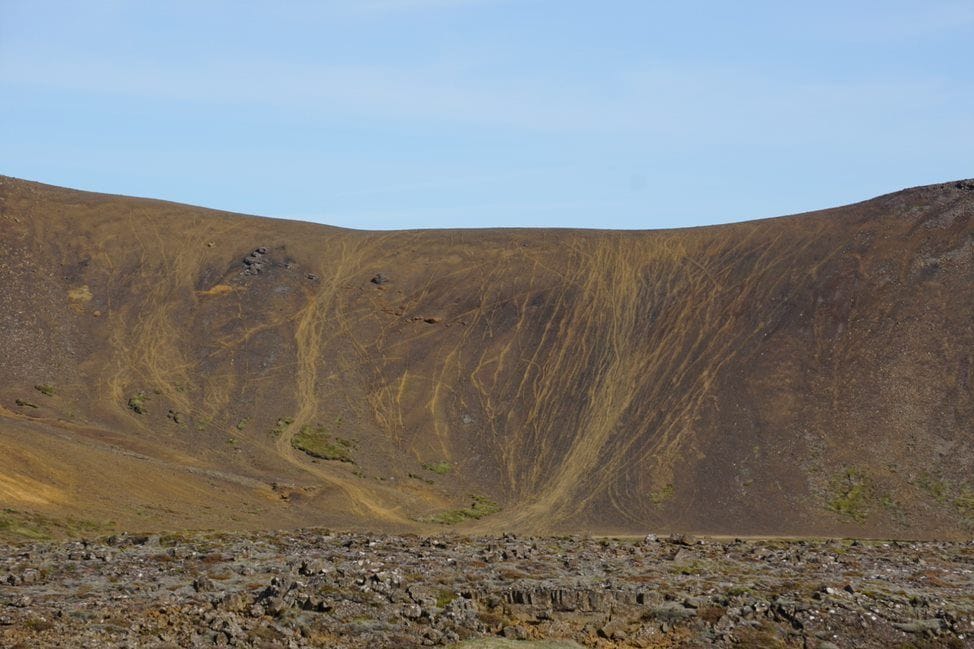
Risk of Irreversible Damage
Icelandic soils are volcanic and particularly loose in structure. In most areas, the wheels of motorised vehicles leave deep tracks in the surface, whether the ground is vegetated or not. Repairing damage caused by off-road driving is difficult and time-consuming, and repeated driving increases the risk of irreversible damage.
Iceland lies just south of the Arctic Circle, where the growing season is short, and damage to vegetation can take decades to recover. On sandy and unvegetated surfaces, vehicle tracks can also remain visible for a very long time. In addition to affecting the appearance of the landscape, tracks can channel water and contribute to soil erosion.
Snow and Puddles on Roads
Off-road driving is a common problem in autumn. Early in the season, snow tends to accumulate on highland roads while the surrounding areas remain snow-free. Large puddles can also form on the roads. Travellers in inadequately equipped vehicles may then be tempted to drive off the road to avoid these conditions.
In most cases, off-road driving occurs on unvegetated land. However, vehicles are occasionally driven across highly sensitive vegetated areas that are difficult to restore. Such driving can cause lasting damage to nature.
Risk of Wind Erosion
Large areas of the highlands are covered by a thin layer of gravel, with finer sand underneath. These gravel surfaces form through a delicate balance between wind erosion, soil conditions and frost action. If the gravel layer is disturbed, for example by vehicle tracks, the underlying sand becomes exposed to the wind, increasing the risk of wind erosion and blowing sand.
It can take decades for the gravel surface to regain its former balance. Vehicle tracks in these surfaces are known to have acted as local sources of wind-blown sand in the Icelandic highlands during the early decades of motorised travel there. In some cases, erosion from the tracks continued for many years after the vehicles had passed.
Off-Road Driving Is Prohibited
The prohibition on off-road driving applies to all motorised vehicles, including off-road vehicles, ATVs and motocross motorcycles.
Drive only on roads and marked tracks, never outside them. If it is not possible to continue driving, proceed on foot or turn back. Check information about your intended route and use road maps to plan your journey before setting off.
Respect seasonal restrictions on travel in uninhabited areas and the highlands, and keep up to date with information on road conditions. Responsible behaviour in Icelandic nature helps ensure that everyone can continue to enjoy its unspoilt landscapes for generations to come.
Information on road conditions is available by calling 1777 or from the Icelandic Road and Coastal Administration.
Off-road driving is strictly prohibited and may result in fines or imprisonment!